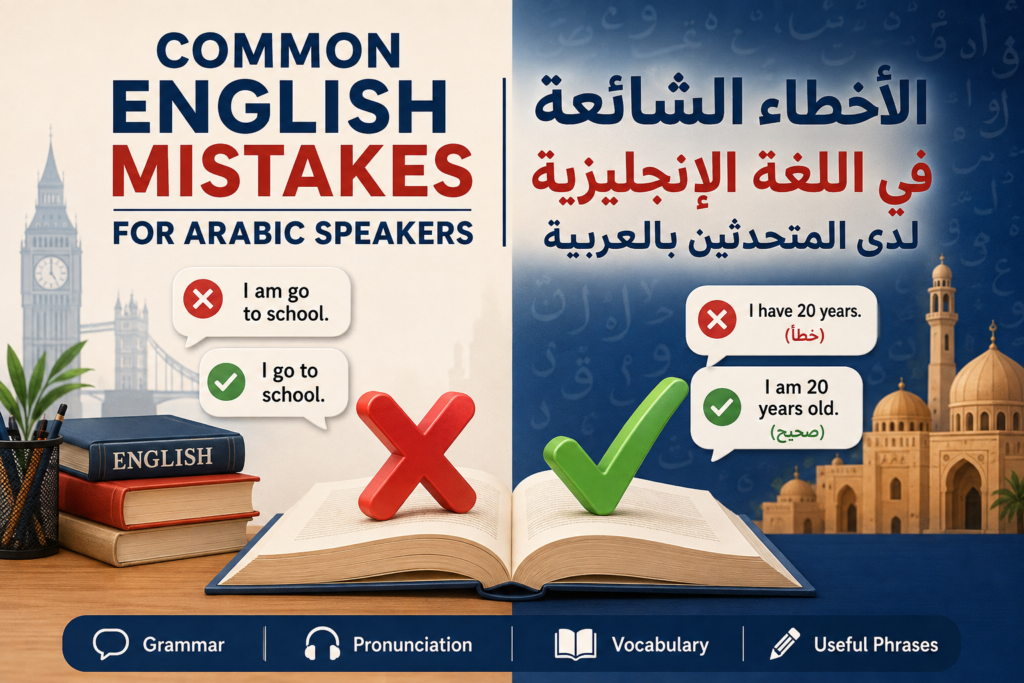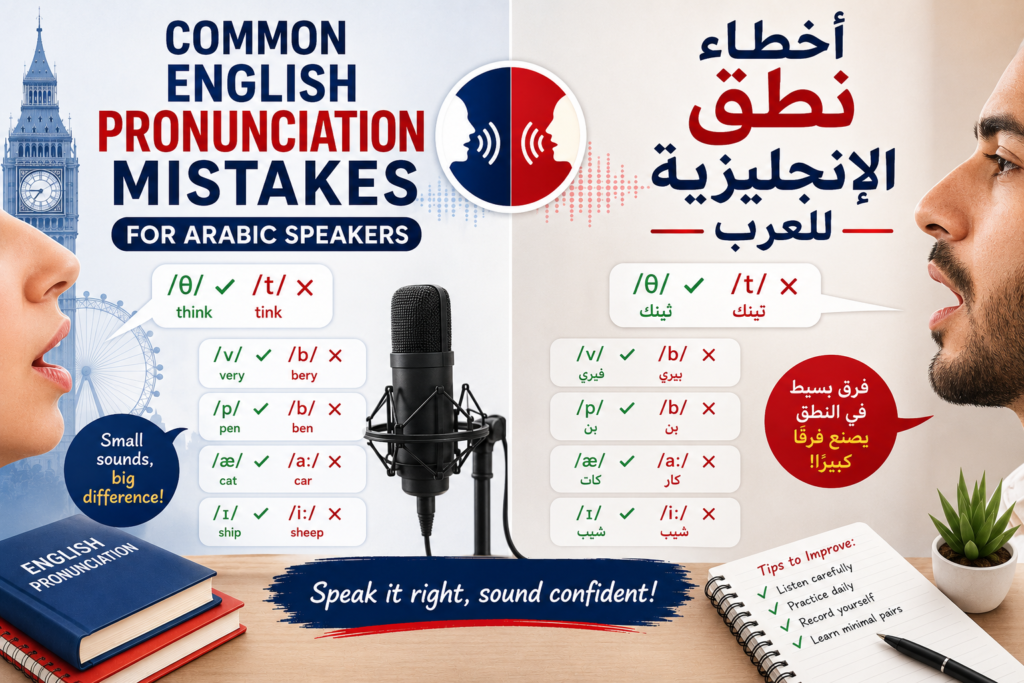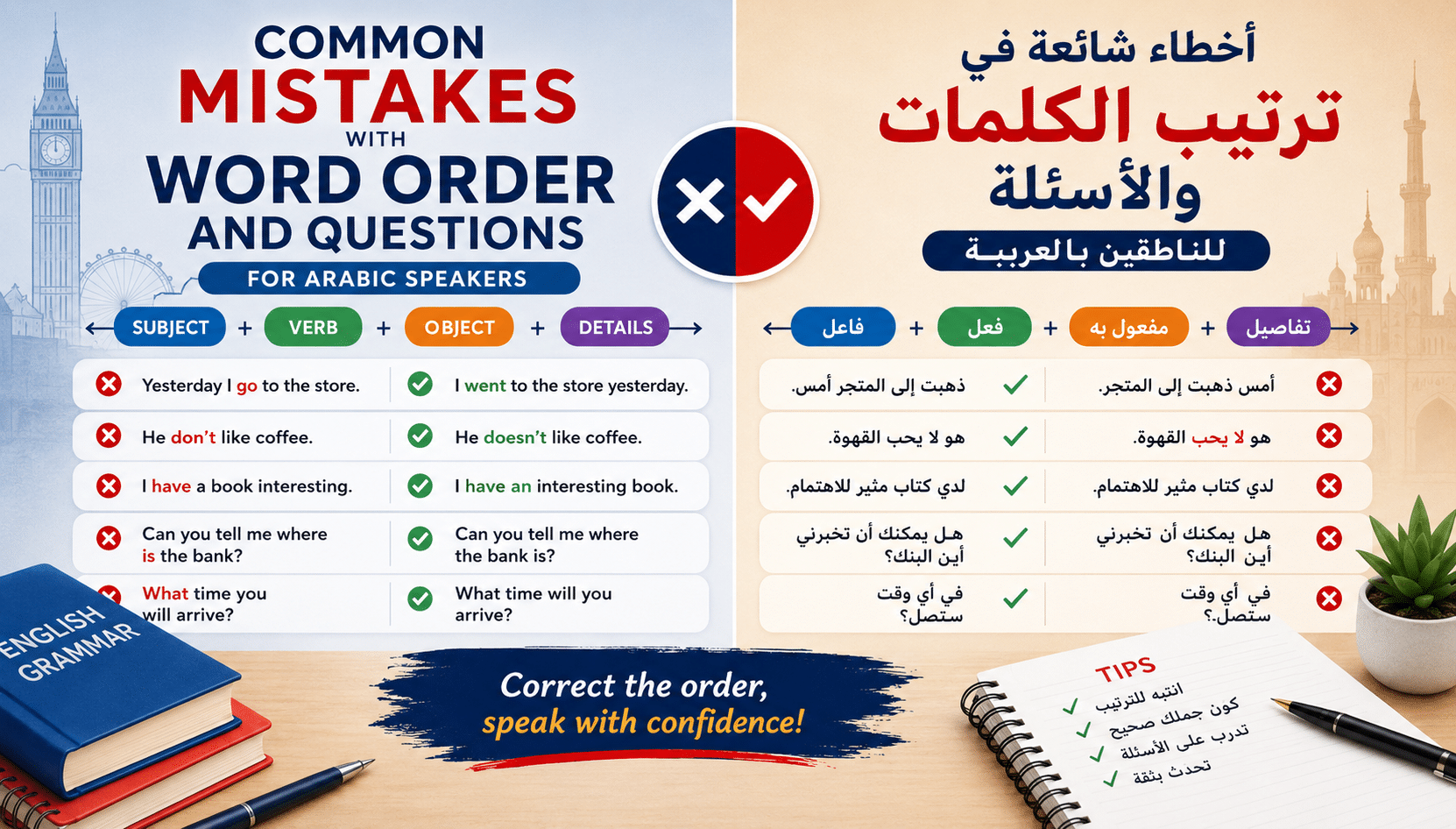
Common Word Order & Question Mistakes for Arabic Speakers | أخطاء ترتيب الكلمات والأسئلة للعرب


Common Mistakes with Word Order and Questions for Arabic Speakers

الأخطاء الشائعة في ترتيب الكلمات وصياغة الأسئلة للناطقين بالعربية


Introduction

Word order in English is quite different from Arabic. English follows a strict Subject-Verb-Object (SVO) structure, while Arabic is more flexible. Question formation also follows different rules in English compared to Arabic.

This guide covers the most common word order and question formation mistakes Arabic speakers make and provides practical tips to avoid them.

المقدمة

يختلف ترتيب الكلمات في اللغة الإنجليزية بشكل كبير عن اللغة العربية. تتبع الإنجليزية هيكلًا صارمًا هو الفاعل-الفعل-المفعول (SVO)، بينما العربية أكثر مرونة. كما تتبع صياغة الأسئلة قواعد مختلفة في الإنجليزية مقارنة بالعربية.

يغطي هذا الدليل الأخطاء الأكثر شيوعًا في ترتيب الكلمات وصياغة الأسئلة التي يقع فيها الناطقون بالعربية، ويقدم نصائح عملية لتجنبها.


1. Basic Word Order: Subject-Verb-Object (SVO)

١. ترتيب الكلمات الأساسي: الفاعل-الفعل-المفعول

The Mistake: Placing the object before the verb or using flexible word order like in Arabic.

Examples:

  • Ahmed a book reads. → ✅ Ahmed reads a book.
  • English I study. → ✅ I study English.
  • The house my father built. → ✅ My father built the house.
  • To school we go every day. → ✅ We go to school every day.

Rule:

  • English word order is FIXED:
  • Subject → Who or what is doing the action
  • Verb → The action itself
  • Object → Who or what receives the action

Example:

SubjectVerbObject
Ieatan apple.
Shewrotea letter.
Theybuiltthe house.

Tip for Arabic speakers: In Arabic, the object can come before the verb. In English, ALWAYS put the subject before the verb!

الخطأ: وضع المفعول قبل الفعل أو استخدام ترتيب كلمات مرن كما في العربية.

أمثلة:

  • Ahmed a book reads. → ✅ Ahmed reads a book.
  • English I study. → ✅ I study English.
  • The house my father built. → ✅ My father built the house.
  • To school we go every day. → ✅ We go to school every day.

القاعدة:

  • ترتيب الكلمات في الإنجليزية ثابت:
  • الفاعل → من يقوم بالفعل
  • الفعل → الفعل نفسه
  • المفعول → من أو ما يقع عليه الفعل

مثال:

الفاعلالفعلالمفعول
Ieatan apple.
Shewrotea letter.
Theybuiltthe house.

نصيحة للناطقين بالعربية: في العربية يمكن أن يأتي المفعول قبل الفعل. في الإنجليزية، ضع الفاعل دائمًا قبل الفعل!


2. Yes/No Questions (Auxiliary + Subject + Verb)

٢. الأسئلة بنعم/لا (الفعل المساعد + الفاعل + الفعل)

The Mistake: Using statement word order in questions instead of inversion.

Examples:

  • You are happy? → ✅ Are you happy?
  • She likes coffee? → ✅ Does she like coffee?
  • They went to the party? → ✅ Did they go to the party?
  • He can speak English? → ✅ Can he speak English?
  • You have finished your homework? → ✅ Have you finished your homework?

Rules:

  • With “To Be” (am/is/are/was/were): Verb + Subject + Complement
  • With Auxiliary Verbs (can, will, have, do, etc.): Auxiliary + Subject + Main Verb
  • With “Do/Does/Did”: Do/Does/Did + Subject + Base Form of Verb

Structure:

AuxiliarySubjectMain VerbObject
Doyoulikecoffee?
Isshecomingtoday?
Havetheyfinishedthe work?

Tip: In English, questions start with the auxiliary verb! Not like Arabic where intonation alone can form a question.

الخطأ: استخدام ترتيب الجملة الخبرية في الأسئلة بدلاً من القلب.

أمثلة:

  • You are happy? → ✅ Are you happy?
  • She likes coffee? → ✅ Does she like coffee?
  • They went to the party? → ✅ Did they go to the party?
  • He can speak English? → ✅ Can he speak English?
  • You have finished your homework? → ✅ Have you finished your homework?

القواعد:

  • مع “To Be” (am/is/are/was/were): الفعل + الفاعل + المتمم
  • مع الأفعال المساعدة (can, will, have, do, إلخ): الفعل المساعد + الفاعل + الفعل الرئيسي
  • مع “Do/Does/Did”: Do/Does/Did + الفاعل + الفعل في المصدر

الهيكل:

المساعدالفاعلالفعل الرئيسيالمفعول
Doyoulikecoffee?
Isshecomingtoday?
Havetheyfinishedthe work?

نصيحة: في الإنجليزية، تبدأ الأسئلة بالفعل المساعد! ليس مثل العربية حيث يمكن تشكيل السؤال بالتنغيم فقط.


3. Wh-Questions (Question Words)

٣. أسئلة Wh- (أدوات الاستفهام)

The Mistake: Placing the question word in the wrong position or missing the auxiliary verb.

Examples:

  • What you are doing? → ✅ What are you doing?
  • Where she went? → ✅ Where did she go?
  • When you will come? → ✅ When will you come?
  • Why he is late? → ✅ Why is he late?
  • How much it costs? → ✅ How much does it cost?

Structure:

Question WordAuxiliarySubjectMain VerbObject
Whatareyoudoing?
Wheredidshego?
Whenwillyoucome?
Whyishelate?
How muchdoesitcost?

Question Words:

  • What → thing: What is your name?
  • Who → person: Who is she?
  • Where → place: Where do you live?
  • When → time: When will you arrive?
  • Why → reason: Why are you crying?
  • How → manner: How do you do this?
  • How much/many → quantity: How much does it cost?
  • Which → choice: Which one do you like?
  • Whose → possession: Whose book is this?

Tip: Question word + auxiliary + subject + main verb. Never forget the auxiliary verb!

الخطأ: وضع أداة الاستفهام في موضع خاطئ أو نسيان الفعل المساعد.

أمثلة:

  • What you are doing? → ✅ What are you doing?
  • Where she went? → ✅ Where did she go?
  • When you will come? → ✅ When will you come?
  • Why he is late? → ✅ Why is he late?
  • How much it costs? → ✅ How much does it cost?

الهيكل:

أداة الاستفهامالمساعدالفاعلالفعل الرئيسيالمفعول
Whatareyoudoing؟
Wheredidshego؟
Whenwillyoucome؟
Whyishelate؟
How muchdoesitcost؟

أدوات الاستفهام:

  • What → شيء: What is your name?
  • Who → شخص: Who is she?
  • Where → مكان: Where do you live?
  • When → وقت: When will you arrive?
  • Why → سبب: Why are you crying?
  • How → طريقة: How do you do this?
  • How much/many → كمية: How much does it cost?
  • Which → اختيار: Which one do you like?
  • Whose → ملكية: Whose book is this?

نصيحة: أداة الاستفهام + الفعل المساعد + الفاعل + الفعل الرئيسي. لا تنسَ الفعل المساعد أبدًا!


4. Questions with Prepositions (Preposition at the End)

٤. الأسئلة مع حروف الجر (حرف الجر في النهاية)

The Mistake: Placing the preposition at the beginning of the question instead of at the end.

Examples:

  • To whom are you talking? (formal) → ✅ Who are you talking to? (informal)
  • In what are you interested? → ✅ What are you interested in?
  • About what are you thinking? → ✅ What are you thinking about?
  • For whom is this gift? → ✅ Who is this gift for?

Rules:

  • In informal/casual English, prepositions go at the END of the question.
  • In formal English, prepositions can go at the beginning.
  • For everyday conversation, put the preposition last!

Structure:

Question WordAuxiliarySubjectVerbPreposition
Whoareyoutalkingto?
Whatareyouinterestedin?
Whatareyouthinkingabout?

Tip: In everyday English, it’s perfectly natural to end questions with a preposition! Arabic speakers often avoid this because it feels strange, but it’s the most common way in English.

الخطأ: وضع حرف الجر في بداية السؤال بدلاً من نهايته.

أمثلة:

  • To whom are you talking? (رسمي) → ✅ Who are you talking to? (غير رسمي)
  • In what are you interested? → ✅ What are you interested in?
  • About what are you thinking? → ✅ What are you thinking about?
  • For whom is this gift? → ✅ Who is this gift for?

القواعد:

  • في الإنجليزية غير الرسمية، توضع حروف الجر في نهاية السؤال.
  • في الإنجليزية الرسمية، يمكن أن توضع حروف الجر في البداية.
  • في المحادثات اليومية، ضع حرف الجر في النهاية!

الهيكل:

أداة الاستفهامالمساعدالفاعلالفعلحرف الجر
Whoareyoutalkingto؟
Whatareyouinterestedin؟
Whatareyouthinkingabout؟

نصيحة: في الإنجليزية اليومية، من الطبيعي تمامًا إنهاء الأسئلة بحرف جر! غالبًا ما يتجنب الناطقون بالعربية هذا لأنه يبدو غريبًا، لكنها الطريقة الأكثر شيوعًا في الإنجليزية.


5. Subject-Questions vs Object-Questions

٥. أسئلة الفاعل مقابل أسئلة المفعول

The Mistake: Using auxiliary verbs incorrectly when asking about the subject.

Examples:

  • Who does want to go? → ✅ Who wants to go?
  • Who did call you? → ✅ Who called you?
  • What does happened? → ✅ What happened?
  • Who does know the answer? → ✅ Who knows the answer?

Rules:

  • Subject-Questions: Ask about the subject. NO auxiliary verb needed! Use SV order.
  • Object-Questions: Ask about the object. NEED auxiliary verb! Use auxiliary + SV.

Comparison:

TypeQuestionAnswer
Subject-QuestionWho called you?Ahmed called me.
Object-QuestionWho did you call?I called Ahmed.

More Examples:

SentenceSubject QuestionObject Question
She bought a car.Who bought a car?What did she buy?
I saw Ahmed.Who saw Ahmed?Who did you see?
They ate the food.Who ate the food?What did they eat?

Tip: If the answer is the SUBJECT → no auxiliary. If the answer is the OBJECT → use auxiliary!

الخطأ: استخدام الأفعال المساعدة بشكل غير صحيح عند السؤال عن الفاعل.

أمثلة:

  • Who does want to go? → ✅ Who wants to go?
  • Who did call you? → ✅ Who called you?
  • What does happened? → ✅ What happened?
  • Who does know the answer? → ✅ Who knows the answer?

القواعد:

  • أسئلة الفاعل: سؤال عن الفاعل. لا حاجة لفعل مساعد! استخدم ترتيب SV.
  • أسئلة المفعول: سؤال عن المفعول. تحتاج فعل مساعد! استخدم مساعد + SV.

مقارنة:

النوعالسؤالالجواب
سؤال الفاعلWho called you?Ahmed called me.
سؤال المفعولWho did you call?I called Ahmed.

أمثلة إضافية:

الجملةسؤال الفاعلسؤال المفعول
She bought a car.Who bought a car?What did she buy?
I saw Ahmed.Who saw Ahmed?Who did you see?
They ate the food.Who ate the food?What did they eat?

نصيحة: إذا كان الجواب هو الفاعل → لا حاجة لمساعد. إذا كان الجواب هو المفعول → استخدم المساعد!


6. Adverbs of Frequency (Always, Never, Often, etc.)

٦. ظروف التكرار (Always, Never, Often, إلخ)

The Mistake: Placing adverbs of frequency at the beginning or end of the sentence instead of mid-position.

Examples:

  • I eat always breakfast. → ✅ I always eat breakfast.
  • She goes never to the gym. → ✅ She never goes to the gym.
  • We are often late. (Correct!) → ✅ We are often late. (Already correct)
  • I have never been to London. (Correct!) → ✅ I have never been to London. (Already correct)

Position Rules:

  • With main verbs: Adverb goes BEFORE the verb
  • With “to be” (am/is/are/was/were): Adverb goes AFTER the verb
  • With auxiliary verbs (have, can, will, etc.): Adverb goes BETWEEN auxiliary and main verb

Examples:

StructureExample
Subject + Adverb + Main VerbI always drink coffee.
Subject + To Be + AdverbShe is always happy.
Subject + Auxiliary + Adverb + Main VerbI have never seen that.

Common Adverbs of Frequency:

  • Always → 100%
  • Usually → 90%
  • Often → 70%
  • Sometimes → 50%
  • Rarely → 20%
  • Never → 0%

Tip for Arabic speakers: In Arabic, adverbs of frequency often come at the beginning or end. In English, they usually come in the middle!

الخطأ: وضع ظروف التكرار في بداية أو نهاية الجملة بدلاً من المنتصف.

أمثلة:

  • I eat always breakfast. → ✅ I always eat breakfast.
  • She goes never to the gym. → ✅ She never goes to the gym.
  • We are often late. (صحيح!) → ✅ We are often late. (صحيح بالفعل)
  • I have never been to London. (صحيح!) → ✅ I have never been to London. (صحيح بالفعل)

قواعد الموضع:

  • مع الأفعال الرئيسية: الظرف يوضع قبل الفعل
  • مع “to be” (am/is/are/was/were): الظرف يوضع بعد الفعل
  • مع الأفعال المساعدة (have, can, will, إلخ): الظرف يوضع بين المساعد والفعل الرئيسي

أمثلة:

الهيكلمثال

Shopping Cart
Scroll to Top