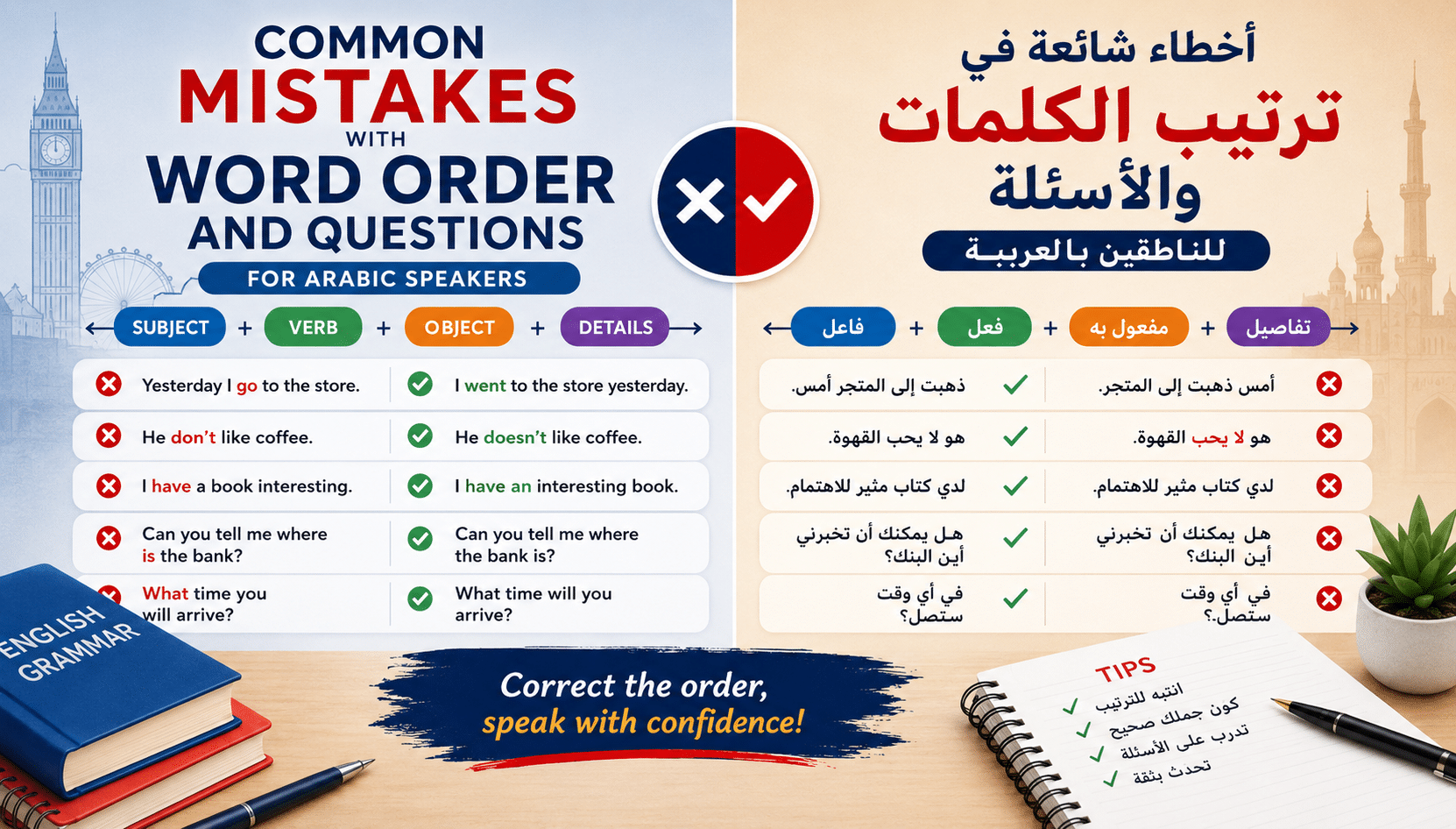
Common Mistakes with Word Order and Questions for Arabic Speakers
الأخطاء الشائعة في ترتيب الكلمات وصياغة الأسئلة للناطقين بالعربية
IntroductionWord order in English is quite different from Arabic. English follows a strict Subject-Verb-Object (SVO) structure, while Arabic is more flexible. Question formation also follows different rules in English compared to Arabic. This guide covers the most common word order and question formation mistakes Arabic speakers make and provides practical tips to avoid them. | المقدمةيختلف ترتيب الكلمات في اللغة الإنجليزية بشكل كبير عن اللغة العربية. تتبع الإنجليزية هيكلًا صارمًا هو الفاعل-الفعل-المفعول (SVO)، بينما العربية أكثر مرونة. كما تتبع صياغة الأسئلة قواعد مختلفة في الإنجليزية مقارنة بالعربية. يغطي هذا الدليل الأخطاء الأكثر شيوعًا في ترتيب الكلمات وصياغة الأسئلة التي يقع فيها الناطقون بالعربية، ويقدم نصائح عملية لتجنبها. |
1. Basic Word Order: Subject-Verb-Object (SVO)
١. ترتيب الكلمات الأساسي: الفاعل-الفعل-المفعول
The Mistake: Placing the object before the verb or using flexible word order like in Arabic. Examples:
Rule:
Example:
Tip for Arabic speakers: In Arabic, the object can come before the verb. In English, ALWAYS put the subject before the verb! | الخطأ: وضع المفعول قبل الفعل أو استخدام ترتيب كلمات مرن كما في العربية. أمثلة:
القاعدة:
مثال:
نصيحة للناطقين بالعربية: في العربية يمكن أن يأتي المفعول قبل الفعل. في الإنجليزية، ضع الفاعل دائمًا قبل الفعل! |
2. Yes/No Questions (Auxiliary + Subject + Verb)
٢. الأسئلة بنعم/لا (الفعل المساعد + الفاعل + الفعل)
The Mistake: Using statement word order in questions instead of inversion. Examples:
Rules:
Structure:
Tip: In English, questions start with the auxiliary verb! Not like Arabic where intonation alone can form a question. | الخطأ: استخدام ترتيب الجملة الخبرية في الأسئلة بدلاً من القلب. أمثلة:
القواعد:
الهيكل:
نصيحة: في الإنجليزية، تبدأ الأسئلة بالفعل المساعد! ليس مثل العربية حيث يمكن تشكيل السؤال بالتنغيم فقط. |
3. Wh-Questions (Question Words)
٣. أسئلة Wh- (أدوات الاستفهام)
The Mistake: Placing the question word in the wrong position or missing the auxiliary verb. Examples:
Structure:
Question Words:
Tip: Question word + auxiliary + subject + main verb. Never forget the auxiliary verb! | الخطأ: وضع أداة الاستفهام في موضع خاطئ أو نسيان الفعل المساعد. أمثلة:
الهيكل:
أدوات الاستفهام:
نصيحة: أداة الاستفهام + الفعل المساعد + الفاعل + الفعل الرئيسي. لا تنسَ الفعل المساعد أبدًا! |
4. Questions with Prepositions (Preposition at the End)
٤. الأسئلة مع حروف الجر (حرف الجر في النهاية)
The Mistake: Placing the preposition at the beginning of the question instead of at the end. Examples:
Rules:
Structure:
Tip: In everyday English, it’s perfectly natural to end questions with a preposition! Arabic speakers often avoid this because it feels strange, but it’s the most common way in English. | الخطأ: وضع حرف الجر في بداية السؤال بدلاً من نهايته. أمثلة:
القواعد:
الهيكل:
نصيحة: في الإنجليزية اليومية، من الطبيعي تمامًا إنهاء الأسئلة بحرف جر! غالبًا ما يتجنب الناطقون بالعربية هذا لأنه يبدو غريبًا، لكنها الطريقة الأكثر شيوعًا في الإنجليزية. |
5. Subject-Questions vs Object-Questions
٥. أسئلة الفاعل مقابل أسئلة المفعول
The Mistake: Using auxiliary verbs incorrectly when asking about the subject. Examples:
Rules:
Comparison:
More Examples:
Tip: If the answer is the SUBJECT → no auxiliary. If the answer is the OBJECT → use auxiliary! | الخطأ: استخدام الأفعال المساعدة بشكل غير صحيح عند السؤال عن الفاعل. أمثلة:
القواعد:
مقارنة:
أمثلة إضافية:
نصيحة: إذا كان الجواب هو الفاعل → لا حاجة لمساعد. إذا كان الجواب هو المفعول → استخدم المساعد! |
6. Adverbs of Frequency (Always, Never, Often, etc.)
٦. ظروف التكرار (Always, Never, Often, إلخ)
The Mistake: Placing adverbs of frequency at the beginning or end of the sentence instead of mid-position. Examples:
Position Rules:
Examples:
Common Adverbs of Frequency:
Tip for Arabic speakers: In Arabic, adverbs of frequency often come at the beginning or end. In English, they usually come in the middle! | الخطأ: وضع ظروف التكرار في بداية أو نهاية الجملة بدلاً من المنتصف. أمثلة:
قواعد الموضع:
أمثلة:
|